

A Special Message to our Patients
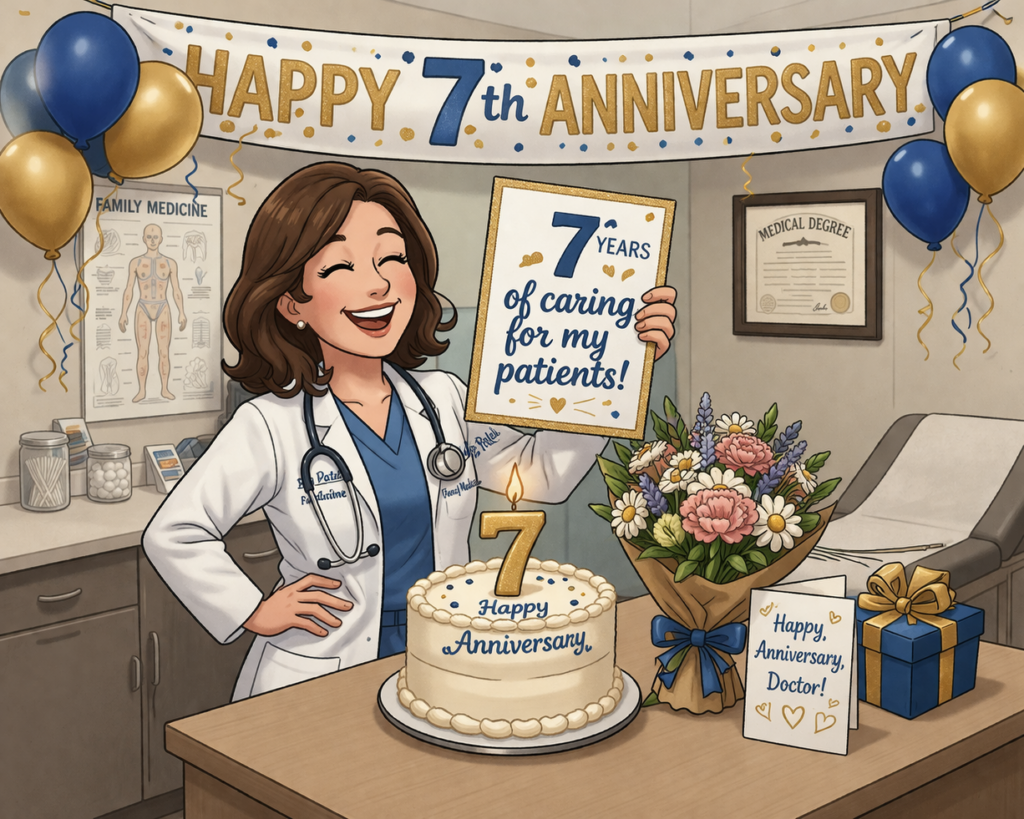
As we mark this 7th anniversary milestone, we pause to express our thanks to you for placing your trust in our care. Thank you also for helping our practice get established and thrive. We look forward to a long and and healthy relationship over the coming years.
—Dr. Alla Weisz,
Samantha Salgado, Peter Weisz
===========================================================================

Q: Should I Go Gluten-Free?
A. There are pros and cons to consider before going on a gluten-free diet:
PROS:
1) Reduce gluten sensitivity symptoms
It can reduce symptoms (bloating, diarrhea, abdominal pain, fatigue) for people with diagnosed non-celiac gluten sensitivity.
2) Healthier Cooking
May prompt healthier cooking at home (more whole foods like fruits, vegetables, rice, quinoa, legumes).
3) Celiac disease
Essential treatment for celiac disease and required for wheat allergy; eliminates cause of symptoms and intestinal damage.
CONS:
1) No health benefits for most people
No proven health benefit for most people without gluten-related disorders; not a guaranteed weight-loss or “healthier” diet.
2) Nutritional drawbacks
Risk of nutrient shortfalls: lower intake of fiber, B vitamins (thiamin, niacin, folate).
3) Expense
Many packaged gluten-free products are more expensive and often higher in sugar, salt, and fat to improve taste/texture.
Be sure to consult with Dr. Weisz before you consider going on a gluten-free diet or if you suspect a gluten-related disorder.
===========================================================================
Sources: Martina Marciniak et al; Nutrients. 2021 Feb 16;13(2):643. doi: 10.3390/nu13020643
===========================================================================
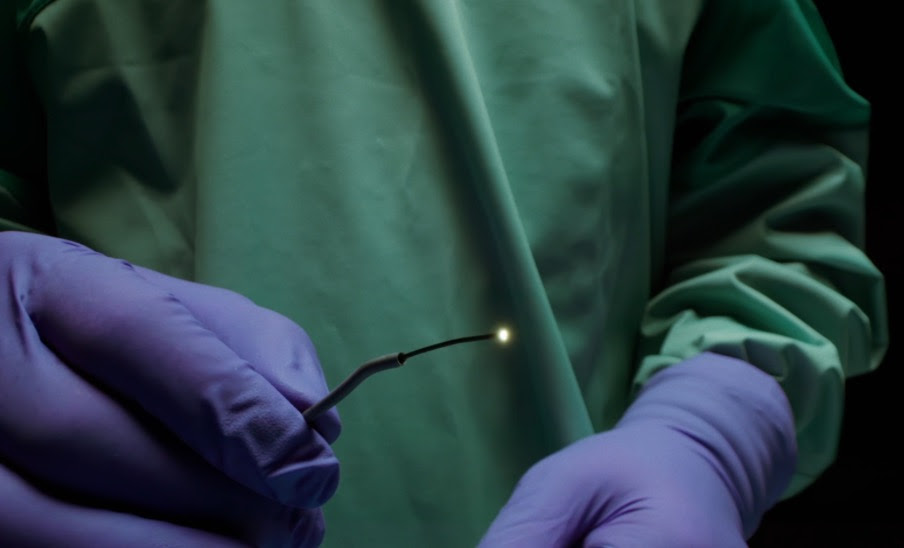
FDA Approves Breakthrough Micro-Camera
A Canadian medical equipment company, Vena Medical, has received FDA clearance for the world’s smallest intravenous camera. Its Vena MicroAngioscope System, a tiny intravascular camera is designed to capture images inside of peripheral arteries without X-ray fluoroscopy.
The device connects to standard endoscopy equipment and, using a balloon catheter and saline flush, provides real-time color images from inside blood vessels. It has already been used in over 100 patients in Canada, and the company plans to expand into the U.S. market.
A first-in-human study published in Stroke evaluated the device in cerebral (brain) vasculature across 31 patients. Results showed the system could be safely delivered to target areas, produced clear live images, and caused no complications. Researchers highlighted its improved flexibility and image quality compared to older angioscopes, enabling use in delicate intracranial vessels. While early findings are promising, larger studies are needed to confirm its role in routine clinical practice.
===========================================================================
Source: Michael Walter | March 12, 2026 | Cardiovascular Business | Vascular & Endovascular
===========================================================================
New Cholesterol Guidelines Issued by the American Heart Assoc.
Cholesterol management is evolving — and the focus is shifting toward earlier detection, better risk prediction, and more aggressive prevention.
New cholesterol management guidelines have been released by the American Heart Association aimed at reducing heart disease risk.
Key points:
Earlier screening: Cholesterol testing should begin in childhood (around age 10) and continue regularly from early adulthood, emphasizing early detection and treatment.
Improved risk assessment: A new tool (PREVENT-ASCVD) estimates both 10- and 30-year heart disease risk to guide treatment decisions.
Lower LDL targets: Recommended “bad” cholesterol (LDL) levels are stricter, especially for higher-risk individuals (as low as 55 mg/dL for those with existing heart disease).
Lp(a) testing: All adults should be tested at least once for lipoprotein(a), a genetic risk factor that can increase cardiovascular risk.
Avoid supplements: Common supplements (like fish oil or garlic) are not effective at lowering LDL compared to proven medications like statins.
Overall message: Start monitoring cholesterol earlier, use better risk tools, aim for lower LDL levels, and rely on evidence-based treatments rather than supplements.
===========================================================================
Source: By Jenna Anderson Health.com. Updated on March 18, 2026
===========================================================================
Memories From Our First 7 Years
===========================================================================
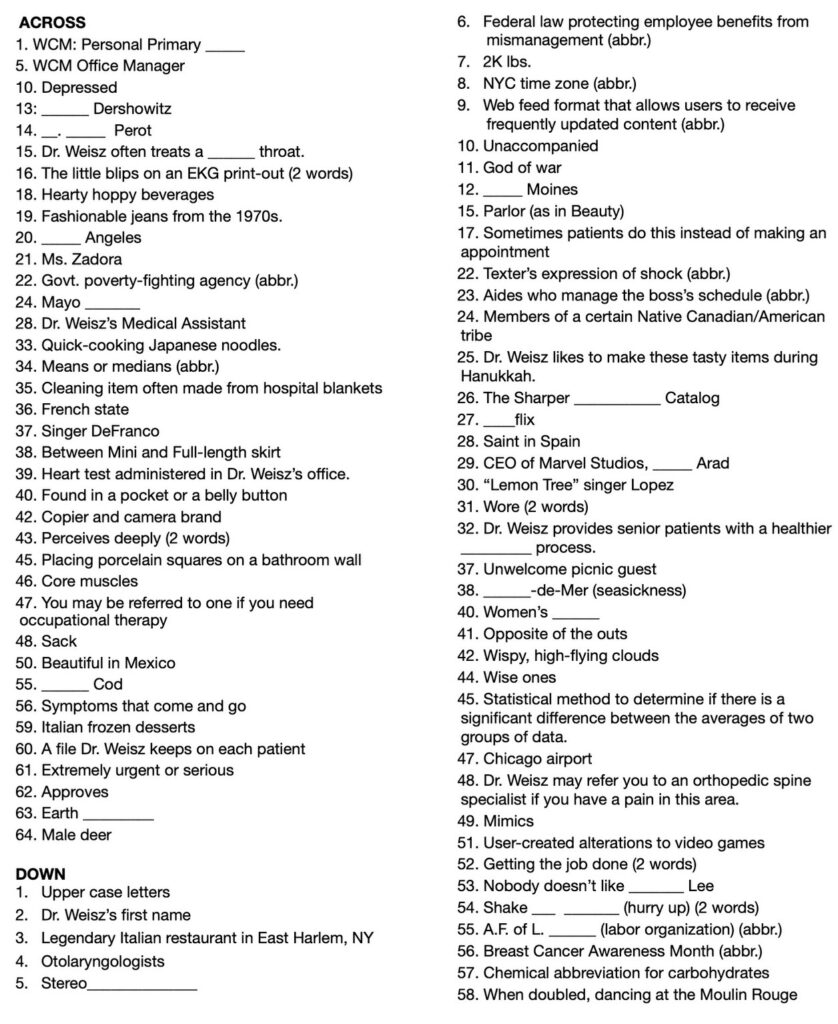
WCM Anniversary Crossword Puzzle
(Solution at the bottom of the page)
Crossword puzzles can help maintain mental acuity and slow cognitive decline in older adults. Research indicates they can improve memory, attention, and reasoning, with studies suggesting that regular, challenging word puzzles may delay the onset of dementia symptoms by up to 2.5 years.
Here’s one designed just for WCM patients. Print it out and have fun.

===========================================================================
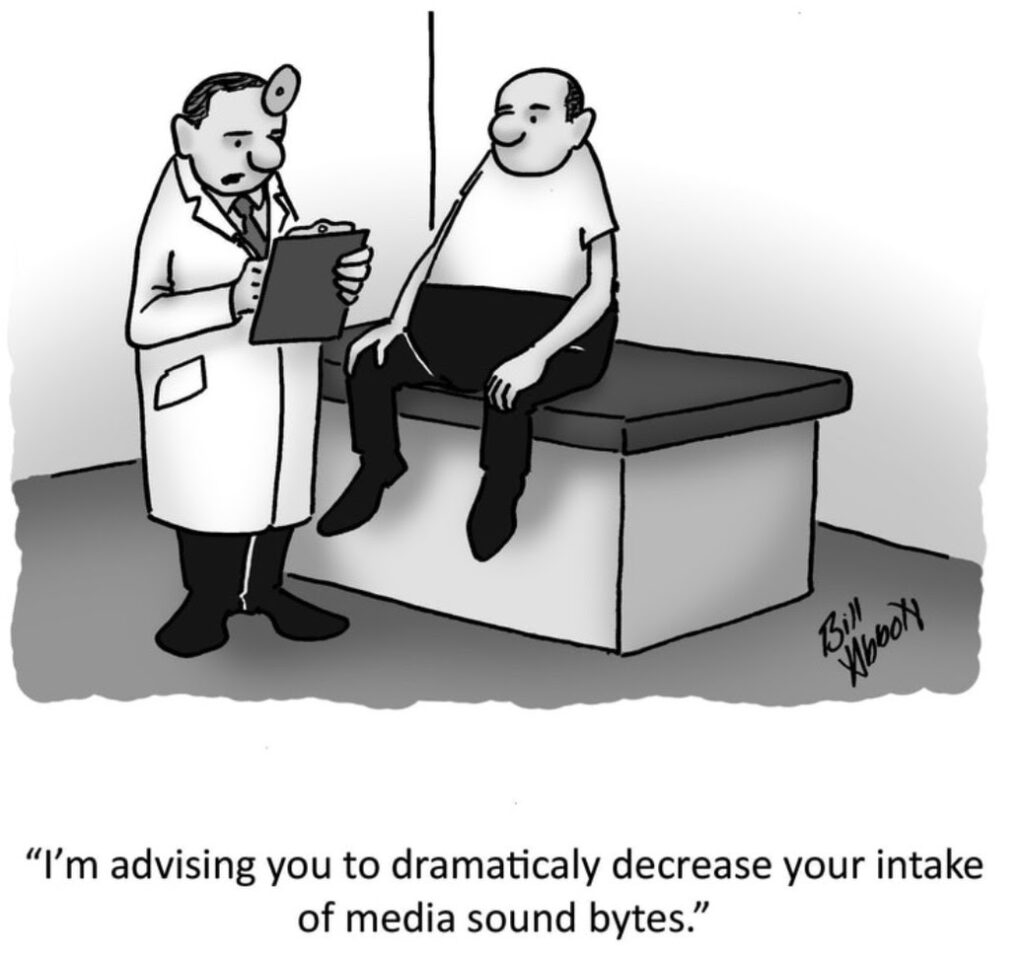
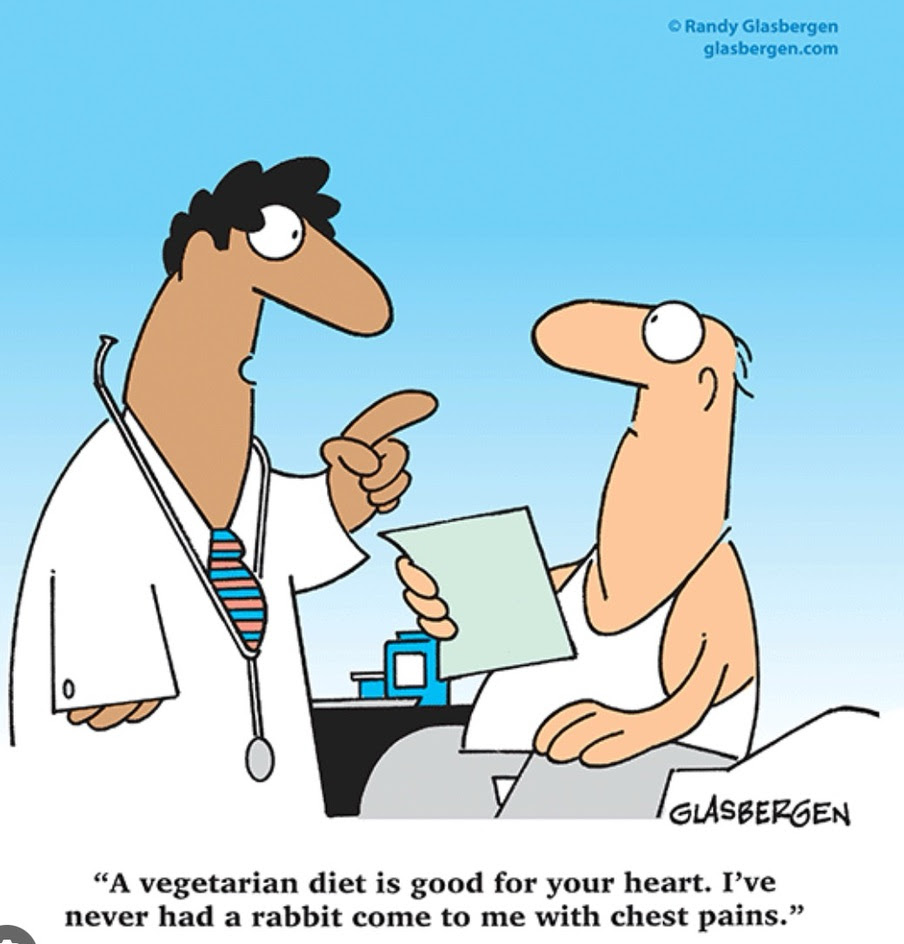
ON THE LIGHTER SIDE

===========================================================================
❤️ Heart-Healthy Blueberry Oat Cake
Here’s a heart-healthy cake recipe that keeps things light on saturated fat and added sugar while still tasting great:

8 Slices • Time: 45 – 50 minutes • Healthy, flavorful, and effortlessly impressive.
Ingredients:
- 1 cup rolled oats (blended into oat flour or use oat flour directly)
- 1 cup whole wheat flour
- 1 ½ tsp baking powder
- ½ tsp baking soda
- ½ tsp cinnamon
- ¼ tsp salt
- 2 large eggs (or 2 flax eggs for plant-based)
- ½ cup unsweetened applesauce (replaces butter/oil)
- ⅓ cup honey or maple syrup
- ¾ cup plain Greek yogurt (or plant-based yogurt)
- 1 tsp vanilla extract
- 1 cup fresh or frozen blueberries
Directions:
- Preheat oven to 350°F (175°C). Lightly grease or line an 8-inch cake pan.
- Mix dry ingredients: In a bowl, whisk together oat flour, whole wheat flour, baking powder, baking soda, cinnamon, and salt.
- Mix wet ingredients: In another bowl, whisk eggs, applesauce, honey, yogurt, and vanilla until smooth.
- Combine: Gently fold the dry ingredients into the wet mixture.
- Add blueberries: Fold them in carefully.
- Bake: Pour batter into pan and bake for 30–35 minutes, or until a toothpick comes out clean.
- Cool: Let cool before slicing.
Why It’s Heart-Healthy
- Oats & whole wheat → high in fiber, help lower cholesterol
- Applesauce instead of butter → reduces saturated fat
- Moderate natural sweeteners → less added sugar
- Greek yogurt → adds protein and reduces need for fats
===========================================================================
Source: healthylivingpc.com/blueberry-oat-cake
===========================================================================